
Choosing the right one isn't about defaulting to a familiar chemistry or the lowest quote per kilogram. It depends on your specific PVC type, processing method, formulation, appearance targets, end-use requirements, and total cost-in-use. A grade that's perfect for rigid pipe can fail completely in flexible wire insulation.
This guide walks through stabilizer types, how to match them to your application, what to ask suppliers, and how to validate a candidate before committing to production.
Key Takeaways
- Choose stabilizers that protect PVC from heat degradation and preserve finished-product appearance and performance.
- Compare systems by PVC type, process conditions, clarity, weatherability, compatibility, documentation, and cost-in-use—not price alone.
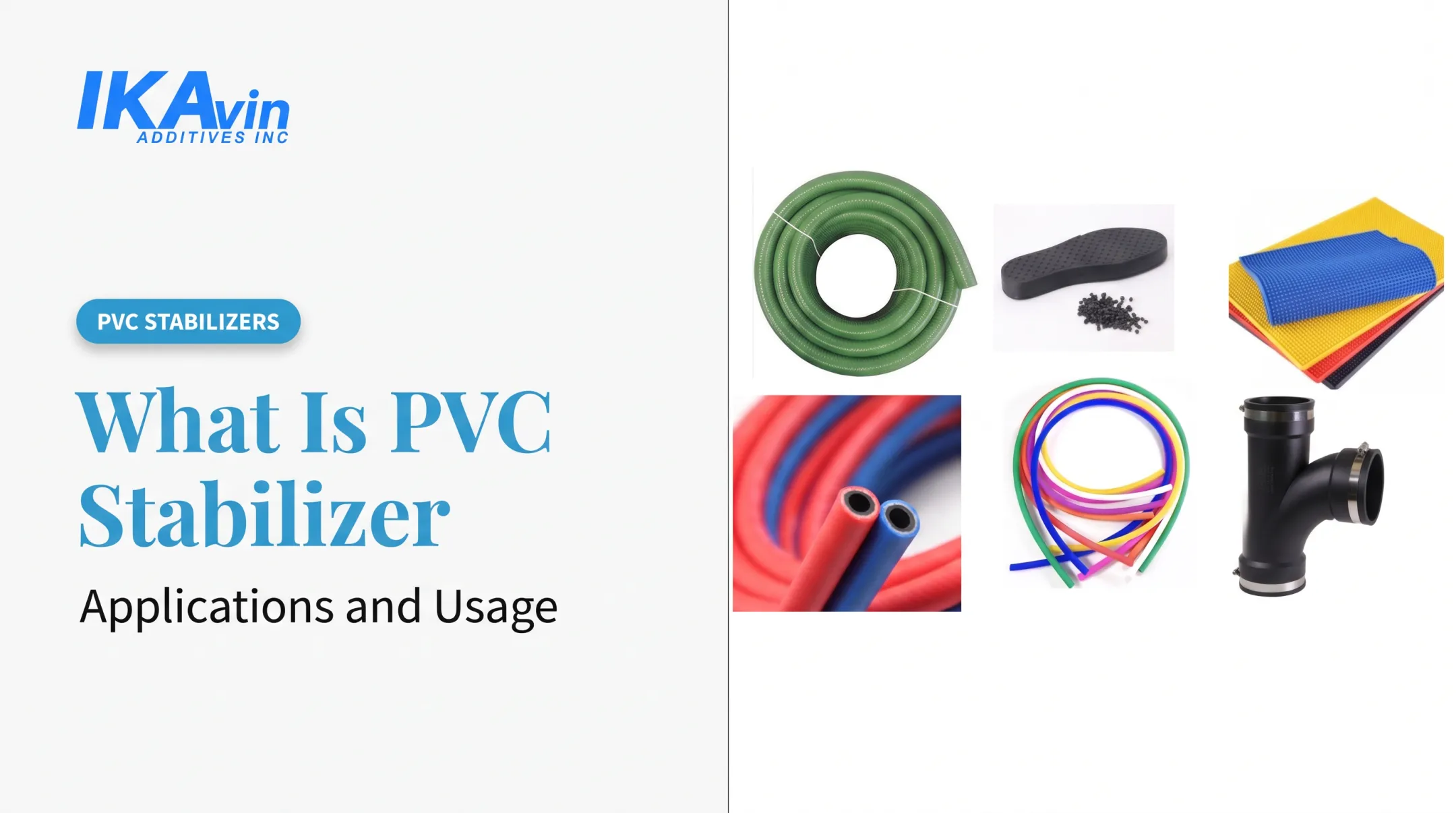
- Pipes, profiles, film, flooring, wire and cable, and flexible goods each demand different stabilizer performance.
- Validate shortlisted grades with measurable pass/fail criteria before approving production.
What is a PVC Stabilizer?
A PVC stabilizer is a functional additive, or additive package, that limits thermal and light-induced degradation of polyvinyl chloride during processing and throughout its service life.
Here's why that matters: PVC releases hydrogen chloride (HCl) when exposed to heat and shear. That HCl accelerates further breakdown, forming conjugated double bonds responsible for yellowing and browning.
Research published in Polymers confirms this autocatalytic cycle. Stabilizers interrupt it by scavenging HCl before the next round of degradation can start.
Types of PVC Stabilizers
No single chemistry is universally superior. Each system trades off differently:
| Stabilizer type | Typical fit | Watch for |
|---|---|---|
| Calcium-zinc (Ca-Zn) | Rigid and flexible PVC; good initial color and heat stability with co-stabilizers | Loading and lubrication must match the process; zinc can "burn" without adequate co-stabilization |
| Organic-based (OBS) / calcium-organic | Rigid PVC where extended initial color hold matters | Fusion can run slower, so lubrication and processing aids may need rebalancing |
| Other mixed-metal (Ba-Zn, Mg-Zn) | Demanding thermal processing | Barium-containing systems need careful review against the intended end use |
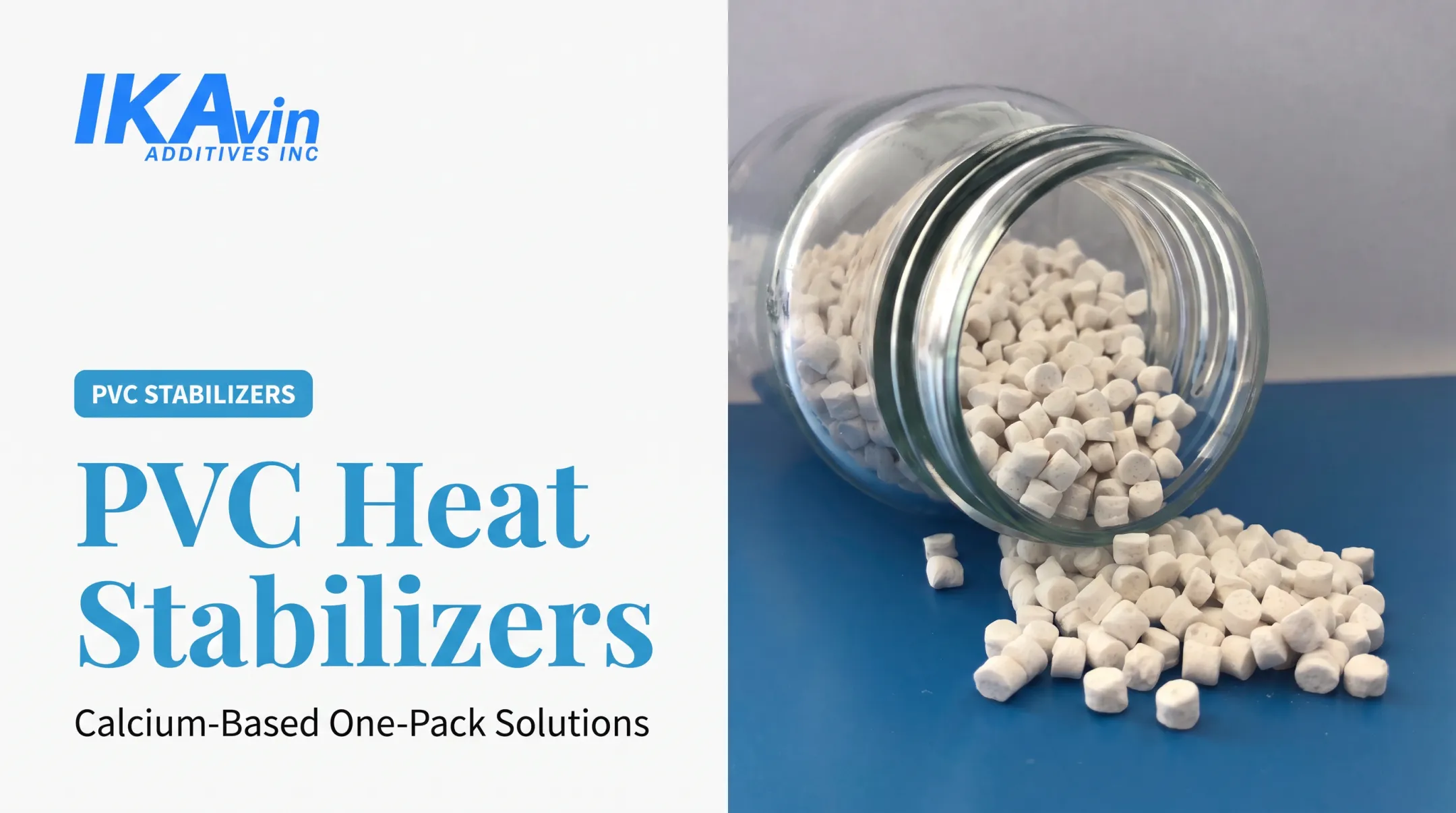
Many suppliers now sell one-pack stabilizers: the stabilizer chemistry pre-combined with lubricants and co-stabilizers. This simplifies dosing, but it also means the entire package's compatibility with your formulation matters, not just the core stabilizer chemistry.
Core Functions of a PVC Stabilizer
Thermal stabilization is the headline job: neutralizing degradation byproducts and slowing the chain reactions behind yellowing, browning, black specks, and strength loss.
But color and durability aren't the same thing. Initial color hold describes appearance during processing. Long-term heat stability describes how the product performs over its service life. A package can excel at one and lag at the other.
A controlled comparison in Polymers shows the gap clearly. At 3 phr loading and 180°C, researchers measured:
- Ca-Zn package: approximately 40 minutes initial color retention
- Organic-based stabilizer (OBS): up to 50 minutes
Yet fusion times told a different story entirely: 452 seconds for Ca-Zn and 581 for OBS. Longer color hold didn't mean faster or identical fusion behavior. These figures apply to the tested formulation and conditions only; they're a reminder to test your own recipe rather than assume the pattern transfers.

Stabilizers also influence lubrication balance, fusion behavior, dispersion, plate-out risk, and compatibility with plasticizers, fillers, pigments, impact modifiers, and processing aids. Changing one variable in the stabilizer package can shift all of these.
Benefits of Using the Right Stabilizer
Get the match right, and the operational payoff shows up across the line:
- Wider processing window with fewer surprises during start-up or line stops
- More consistent output and reduced scrap
- Fewer unplanned interruptions
- Improved surface finish
- More predictable physical properties batch to batch
These outcomes depend entirely on your specific formulation and process. Treat any performance or cost claim with skepticism unless it's backed by supplier data, your own lab testing, or a documented case study.
What to Consider When Choosing the Best PVC Stabilizer
Selection criteria shift by application. Rigid pipe, window profile, foam board, wire and cable, flooring, film, hose, and molded goods each carry distinct thermal, mechanical, appearance, and end-use demands.
A practical decision sequence looks like this:
- Define the product and process in detail.
- Identify performance and end-use requirements specific to that application.
- Shortlist compatible stabilizer systems.
- Request full technical documentation from candidate suppliers.
- Validate through controlled trials before production approval.

PVC Type, Application, and Target Appearance
Start with the basics: is the product rigid, semi-rigid, flexible, foamed, clear, opaque, glossy, matte, or heavily pigmented? Each answer connects to heat stability, clarity, color hold, flexibility, and surface-quality requirements.
Match the stabilizer to end use specifics:
- Pipe and fittings need pressure and dimensional stability under sustained heat exposure.
- Profiles require good weldability, weatherability, and surface finish.
- Foam products depend on consistent cell structure and density control.
- Wire and cable insulation must hold electrical properties through thermal aging.
- Flexible products need clarity, softness, low migration, and printability depending on the end use.
Processing Conditions and Thermal History
Review your actual process: extrusion, calendering, injection molding, or compounding. Factor in melt temperature, shear, residence time, output rate, screw or die design, and start-up or shutdown behavior.
A grade that performs fine at steady-state can behave differently during long residence time, high shear, line stops, material changeovers, or seasonal variation in plant temperature. Monitor these process KPIs when evaluating a candidate:
- Color change over time
- Torque or melt pressure stability
- Output consistency
- Defect frequency (specks, streaks, die buildup)
Compatibility with the Complete Formulation
A stabilizer never works alone. Evaluate it against plasticizers, lubricants, fillers, pigments like titanium dioxide, impact modifiers, processing aids, recycled PVC content, and any co-stabilizers already in the recipe.
Switching stabilizer families or one-pack grades often means rebalancing lubrication and processing aids. Check for these compatibility red flags during trials:
- Plate-out on tooling
- Blooming or surface migration
- Poor dispersion
- Haze in clear formulations
- Odor
- Surface finish defects
Required Performance and Service Environment
Processing performance and in-service performance are separate questions. Processing covers initial color and fusion behavior. In-service needs vary by end use and typically include:
- Long-term heat stability, UV resistance, and weatherability
- Mechanical retention and electrical properties
- Clarity, flexibility, migration, and odor
- Chemical exposure resistance where relevant
Identify the service environment: indoor or outdoor use, elevated temperature, sunlight, moisture, pressure, abrasion, or contact with sensitive products. Each condition should map to a measurable specification or recognized test method, not a general assumption about "good enough" performance.
Customer, Documentation, and Sustainability Requirements
Confirm your customer requirements before finalizing anything: product-contact expectations, material disclosure requests, and documentation like SDS, TDS, and certificates of analysis.
Be precise here. Every product specification and certification program has a defined scope, naming the exact properties and test methods it covers. Read that scope closely, and confirm which properties your stabilizer package actually needs to be tested for rather than assuming one certificate answers every question.
That distinction matters because "calcium-based" or "sustainable" positioning should be backed by the supplier's actual formulation and documentation, not treated as a complete conclusion on its own. A Ca-Zn package still contains zinc. A Ba-Zn package still contains barium. Ask for the specifics.
Supplier Consistency and Total Cost-in-Use
Price per kilogram is the easiest number to compare and often the least useful one. Weigh these factors instead:
- Recommended dosage rate
- Batch-to-batch consistency
- Effective processing window
- Scrap and downtime rates
- Cleaning frequency
- Output stability
- Qualification effort required
- Technical support responsiveness
- Supply continuity
Ask suppliers directly about manufacturing controls, quality testing protocols, raw-material consistency, customization capability, sample availability, lead times, and technical assistance. Compare quotes only when the underlying data and test conditions are genuinely equivalent.
Testing and Validation Before Production Approval
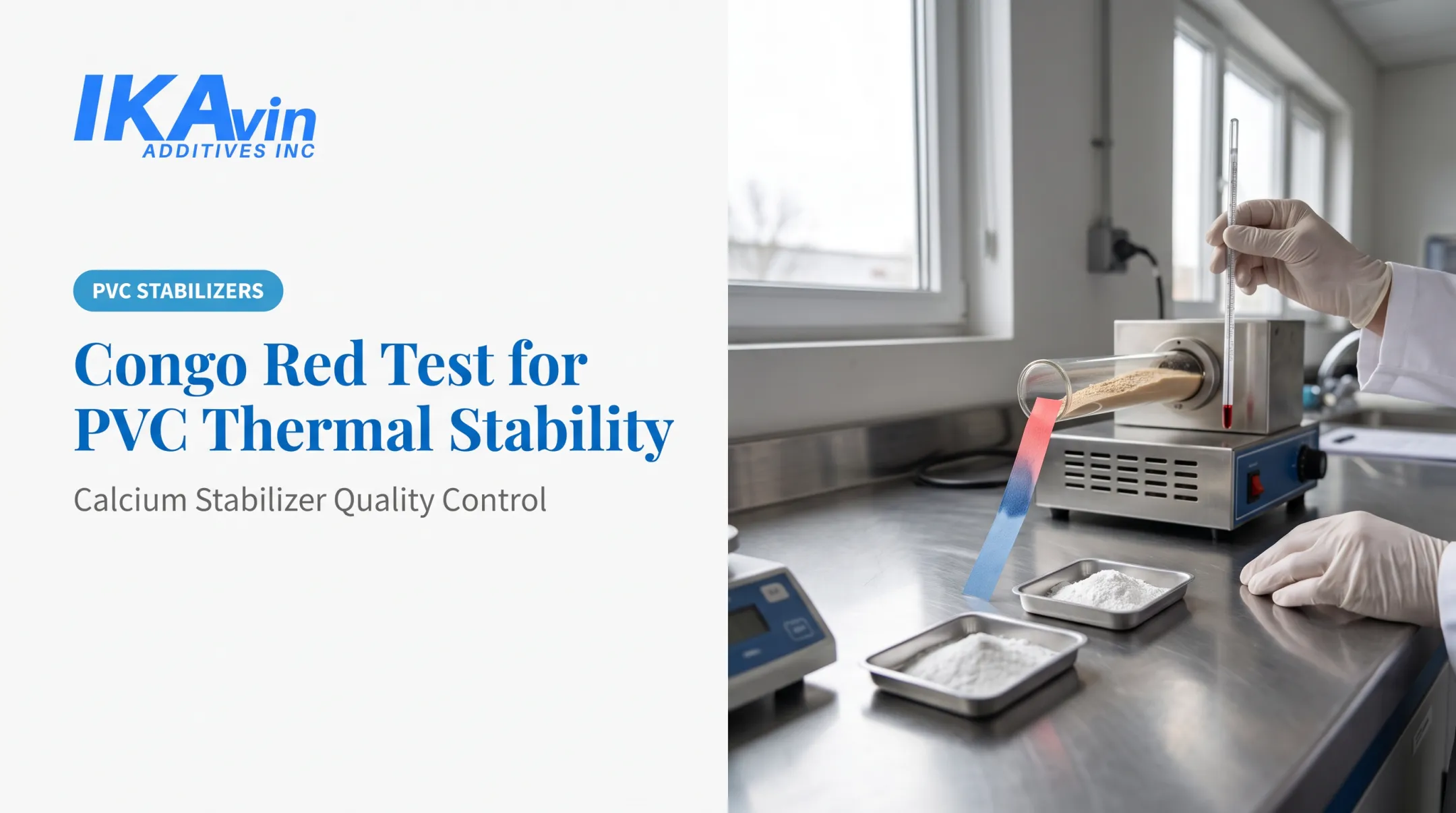
Set pass/fail criteria before you run a single trial. Typical checkpoints include:
- Color hold and thermal stability
- Torque or pressure behavior and output rate
- Dispersion quality, surface finish, and plate-out tendency
- Mechanical properties, weathering resistance, and electrical performance where applicable
Run laboratory or pilot trials using your actual resin, additive package, and equipment under realistic thermal history, including start/stop cycles and extended-residence conditions that mirror real production risk.
Confirm results with repeat batches and, where feasible, a controlled production trial. Keep that baseline data on file. It becomes the reference point for evaluating any future supplier or grade change.

How IKAvin Additives Inc. Can Help
IKAvin Additives Inc. is a joint venture between Germany's IKA Group and Houston-based Ingenia Polymers, built as a technical and manufacturing platform for the North American PVC market.
IKA Group brings more than 30 years of PVC stabilizer experience to the partnership. That experience pairs with sustainable solutions, rigorous quality testing, and custom-designed formulations.
The core offering is calcium-based stabilizer one-packs for flexible and rigid PVC applications. The right grade depends on your resin, process, appearance targets, performance requirements, and documentation needs.
IKAvin works from your specifications rather than pushing a single default product.
Application support spans several product families:
- Rigid pipe, conduit, and fittings — IKAstab HGS 2000 (conduit) and HGS 2700 (pipe)
- Window and technical profiles — IKAstab HGS 5300 (window) and HGS 5100 (technical profiles)
- Siding, fence, trim, and foam board — IKAvin HGS 1000 and IKAstab HGS 6100/8100
- Wire and cable — IKAstab HGS 5200 (sheathing/jacket), HGS 4100 (insulation), HGS 3400 (specialty)
- Flooring — IKAstab HGS 9400 (resilient) and HGS 9900 (cushioned vinyl)
- Films, membranes, and clear products — IKAstab HGS 7100
- Hose, tube, and molded goods — general-purpose flexible one-packs
Confirm the current recommended grade directly with IKAvin, since formulations and product availability evolve.
If you're ready to evaluate options, share your formulation, equipment, processing conditions, target properties, and documentation requirements. That information builds a trial plan around your actual production line.
Conclusion
The best PVC stabilizer is the one that meets your full application and process requirements while delivering consistent, high-quality, cost-effective production. Familiar brand names and the lowest line-item price are weak substitutes for that fit.
Before you lock in a decision, compare:
- Performance in your process window
- Formulation compatibility
- Documentation and technical support
- Supplier consistency
- Total cost-in-use
Then revisit that choice periodically. Resin sources shift, recycled content rises, equipment changes, customer specs tighten, and new grades come to market. A stabilizer that worked two years ago may no longer be your best option.
Frequently Asked Questions
How do I choose a PVC stabilizer?
Start with PVC type, application, processing conditions, appearance targets, performance requirements, additive compatibility, and documentation needs. Then validate the shortlist through controlled testing in your actual formulation.
Can the same stabilizer work for rigid and flexible PVC?
Some one-pack systems are designed for broad use, but rigid and flexible PVC usually need different lubrication balance, plasticizer compatibility, clarity, and migration performance. Confirm suitability through testing rather than assumption.
Which stabilizer is best for pipes, profiles, wire and cable, or flooring?
Each application has distinct criteria: thermal and weather demands for pipe and profiles, electrical and heat-aging needs for wire and cable, and color hold for flooring. Confirm the grade through application-specific trials and supplier documentation.
What should I request from a PVC stabilizer supplier?
Ask for the TDS, SDS, recommended dosage, processing guidance, compatibility data, quality-control records, certificates of analysis, sample quantities, lead times, and technical support contacts.
How do I test a stabilizer before approving it for production?
Run your actual resin and additive package through lab, pilot, and controlled production trials. Measure color hold, thermal stability, output, surface defects, plate-out, mechanical properties, and long-term performance against predefined criteria.