That's why stabilizer composition matters so much. A PVC stabilizer isn't one chemical doing one job. It's a coordinated system of active stabilizers, co-stabilizers, lubricants, and other additives, each handling a specific part of the degradation problem.
This article breaks down what goes into these systems, how the major stabilizer families differ, how one-pack products are actually manufactured, and how formulators at US PVC producers match composition to application.
Key Takeaways
- Stabilizer systems stop HCl release and protect color, weatherability, surface quality, and long-term performance.
- Rigid vs. flexible, clear vs. opaque, and indoor vs. outdoor products each need different formulation balances.
- One-pack production follows qualify → blend → compound → package → release-test.
- Choose suppliers that deliver batch consistency, full documentation, application support, and line-matched formulations.
How PVC Stabilizer Composition Protects the Polymer
The Degradation Mechanism
Heat and mechanical shear during processing knock chlorine atoms loose from the PVC backbone. Each loss creates an HCl molecule and leaves behind a double bond. String enough of these double bonds together (polyene sequences) and you get visible discoloration — a polymer-science study describes the progression moving from yellow through orange and brown to black as polyene chains lengthen.
Worse, the HCl released can catalyze further breakdown, turning a minor processing hiccup into a runaway reaction.
This isn't purely a cosmetic issue. Polyene formation can alter flexibility, transparency, and even electrical resistance. Early NIST research also documented chain scission and crosslinking occurring alongside the color change, meaning oxidative side reactions contribute to failure too, not just HCl loss alone.

What Each Additive Actually Does
It's easy to lump every PVC additive into one bucket. They're not interchangeable:
- Heat stabilizers — prevent degradation during thermal processing
- Light/UV stabilizers — protect against outdoor sun exposure after the part is made
- Plasticizers — make rigid PVC flexible
- Lubricants — reduce friction and metal adhesion during processing
- Processing aids — assist fusion and melt flow, a separate category from heat stabilizers entirely
The European Council of Vinyl Manufacturers draws this same distinction, and conflating these roles is one of the most common mistakes buyers make when reading a technical data sheet.
The Supporting Cast of Ingredients
Inside a typical one-pack, you'll often find several of these working together — though rarely all at once:
- Metal soaps (calcium, zinc): Zinc carboxylates replace labile chlorine early and improve initial color; calcium carboxylates bind HCl and neutralize the zinc chloride byproduct that would accelerate degradation. Research also shows calcium stearate can regenerate zinc soap activity, extending stability across the processing window.
- Co-stabilizers and polyols: Pentaerythritol is a commonly studied co-stabilizer that interacts with metal chlorides to extend stability further.
- Phosphites and antioxidants: Added to liquid mixed-metal systems to fine-tune performance against a specific processing profile.
- Epoxidized compounds: ESBO scavenges HCl through its epoxy groups, but synergy isn't automatic — one study found some conventional stabilizers in ESBO-based formulations reduced stability.
Bottom line: composition choices show up directly in fusion behavior, torque, color hold, plate-out risk, and surface finish. If a formulation is right, you'll see it in testing data, not in marketing claims.
Common PVC Stabilizer Types and Composition Strategies
This guide focuses on three broad families. Suitability depends heavily on the product, the process, and the specific end use.
Calcium-Zinc Systems
Ca-Zn chemistry has become the standard choice for more sustainable PVC production. Calcium carboxylates neutralize HCl and manage zinc chloride buildup, while zinc carboxylates protect early color. Formulators need to watch the balance carefully. Get the ratio wrong and you can sacrifice lubrication, fusion behavior, or long-term stability.
Liquid Mixed-Metal Systems
Barium-zinc, calcium-zinc, and magnesium-zinc liquid systems serve flexible PVC where plasticizer compatibility and migration resistance matter as much as thermal performance. These systems need to handle calendering or extrusion conditions without bleeding out of the finished product over time.
Calcium-Organic and Organic Co-Stabilizer Systems
Calcium-organic systems pair calcium soaps with organic stabilizing chemistry, such as polyols, beta-diketones, and epoxidized oils, to reduce reliance on zinc and limit zinc-burning risk. The organic components handle early color and long-term stability, while calcium carries the HCl-scavenging load. These systems are mostly used in rigid applications, and like any family, performance depends on how well the full package is balanced against the resin, filler, and lubricant system.

Whichever family a formulation starts from, the final choice comes down to how it performs on the customer's resin, equipment, and end use, not the family label alone.
Comparison Framework
| Factor | Ca-Zn | Liquid Mixed-Metal | Calcium-Organic |
|---|---|---|---|
| Active chemistry | Calcium/zinc carboxylates | Ba-Zn, Ca-Zn, Mg-Zn | Calcium soaps + organic co-stabilizers |
| Typical form | Powder, flake, pellet | Liquid | Powder, flake, pellet |
| Clarity | Moderate | Varies by grade | Varies by grade |
| Rigid vs. flexible | Both | Primarily flexible | Primarily rigid |
PVC Stabilizer Manufacturing Process: From Raw Materials to Finished One-Pack
Manufacturing a one-pack stabilizer starts long before any mixing happens.
1. Define the Formulation Specification
Before selecting a single ingredient, formulators need the full picture:
- Target PVC application and processing conditions
- Required color hold, weatherability, and transparency
- Flexibility and end-use requirements
- Physical form and how the customer will handle the product on their line
2. Qualify Raw Materials
Every input (metal compounds, organic co-stabilizers, lubricants, antioxidants, pigments, and processing aids) gets checked for identity, purity, moisture content, and particle size, backed by supplier documentation and lot traceability.
A published preparation study, for example, measured acid value, saponification value, iodine value, titer, and moisture of fatty-acid feedstock before synthesizing calcium and zinc carboxylates. The exact test panel varies by material, but skipping this step risks inconsistent batches downstream.
3. Controlled Weighing and Batching
This stage runs on calibrated equipment, with incompatible materials physically segregated and dust-control measures in place. Documented batch records tie every input back to a specific lot, which matters enormously if a customer ever reports a processing issue.
4. Blend or Prepare the Components
Depending on the stabilizer family, this step might involve:
- Dry blending of solid powders and flakes
- Liquid preparation for mixed-metal systems
- Chemical synthesis steps (like metathesis reactions used to form metal carboxylates from fatty-acid feedstock)
Physical blending and chemical reaction are not the same thing, and the route depends entirely on the chemistry and the supplier's formulation approach.
5. Compound the One-Pack
This is where the stabilizer components combine with compatible lubricants and processing ingredients into a single, consistent product designed for easy dosing on the customer's line. A one-pack simplifies handling compared to dosing five or six separate additives: fewer feeders, less room for operator error, and more consistent output.
6. Form, Finish, and Package
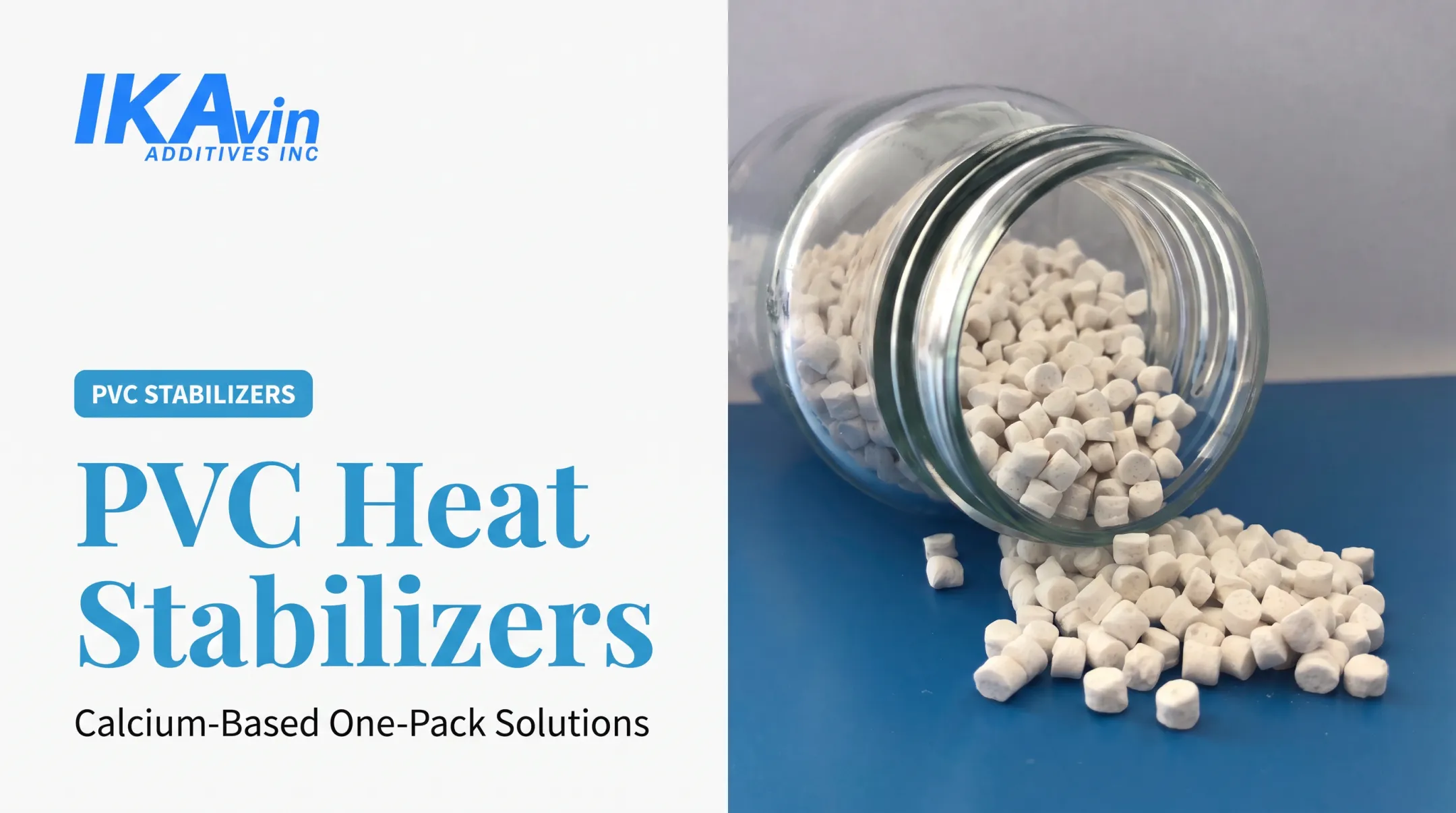
Finished stabilizers ship as powder, flake, liquid, granule, or pellet, depending on the customer's feeding equipment and preference. After cooling and screening, products get packaged and labeled, then stored under conditions that protect against moisture and contamination.

Process-Control Checklist
Before any batch leaves the facility, it should pass checks covering:
- Blend uniformity across the batch
- Appearance (color, consistency, absence of contamination)
- Active-metal or component analysis confirming composition matches spec
- Thermal-stability performance under relevant test conditions
- Moisture content, which affects both stability and processing
- Bulk density or viscosity where applicable to the product form
- Batch-to-batch comparison against prior production runs
At IKAvin, this kind of rigorous quality testing runs across the full calcium-based one-pack range, from IKAstab HGS 2000/2700 for pipe and conduit to HGS 9400/9900 for flooring. Consistent batches let customers run their lines without re-tuning parameters every delivery.
Quality Control, Documentation, and Sustainability Considerations
Validation From Lab to Production
A responsible validation sequence moves through laboratory screening, pilot compounding, and full production trials. Relevant tests include:
- Static heat stability (ISO 182-1, the Congo red method, measures HCl evolution tendency)
- Oven color hold (ASTM D2115 and ISO 305 assess discoloration under controlled heat)
- Fusion and dynamic shear response (ASTM D2538, torque rheometer testing)
- Instrumental color difference (ASTM D2244)
- Plate-out behavior during extended runs
- Finished-product physical testing matched to the application
Documentation That Matters
For any serious PVC manufacturer, the paperwork is non-negotiable:
- Safety data sheets
- Technical data sheets
- Certificates of analysis
- Batch records with lot traceability
- End-use test reports and certifications matched to the application, such as NSF/ANSI 61 for drinking-water contact or UL 83/UL 1581 for wire and cable
These standards apply to specific constructions and uses. None of them amount to blanket certification of an ingredient across every possible application, so matching the right documentation to your specific end use is essential.
Sustainability, Honestly
Calcium-based systems support more sustainable PVC production, and responsible sourcing plus efficient processing can reduce scrap. But any environmental claim needs evidence behind it.
Recycled content deserves the same care. Regrind and post-consumer PVC carry their own heat history and residual additives, so formulations that include recycled material should be trialed with that actual feedstock rather than validated on virgin resin alone.
Matching Composition to PVC Application and Supplier Requirements
Different applications demand very different formulation priorities:
| Application | Key Performance Attributes |
|---|---|
| Rigid pipe & conduit | Melt flow under high filler loads, dynamic thermal stability, NSF/ANSI 61 where potable water applies |
| Window & technical profiles | Precise initial color, weatherability, welding performance |
| Siding, fence & foam board | Foam cell structure control, density consistency |
| Wire & cable | Heat stability, electrical properties, UL-type requirements |
| Vinyl & LVT flooring | Color hold through calendering and lamination |
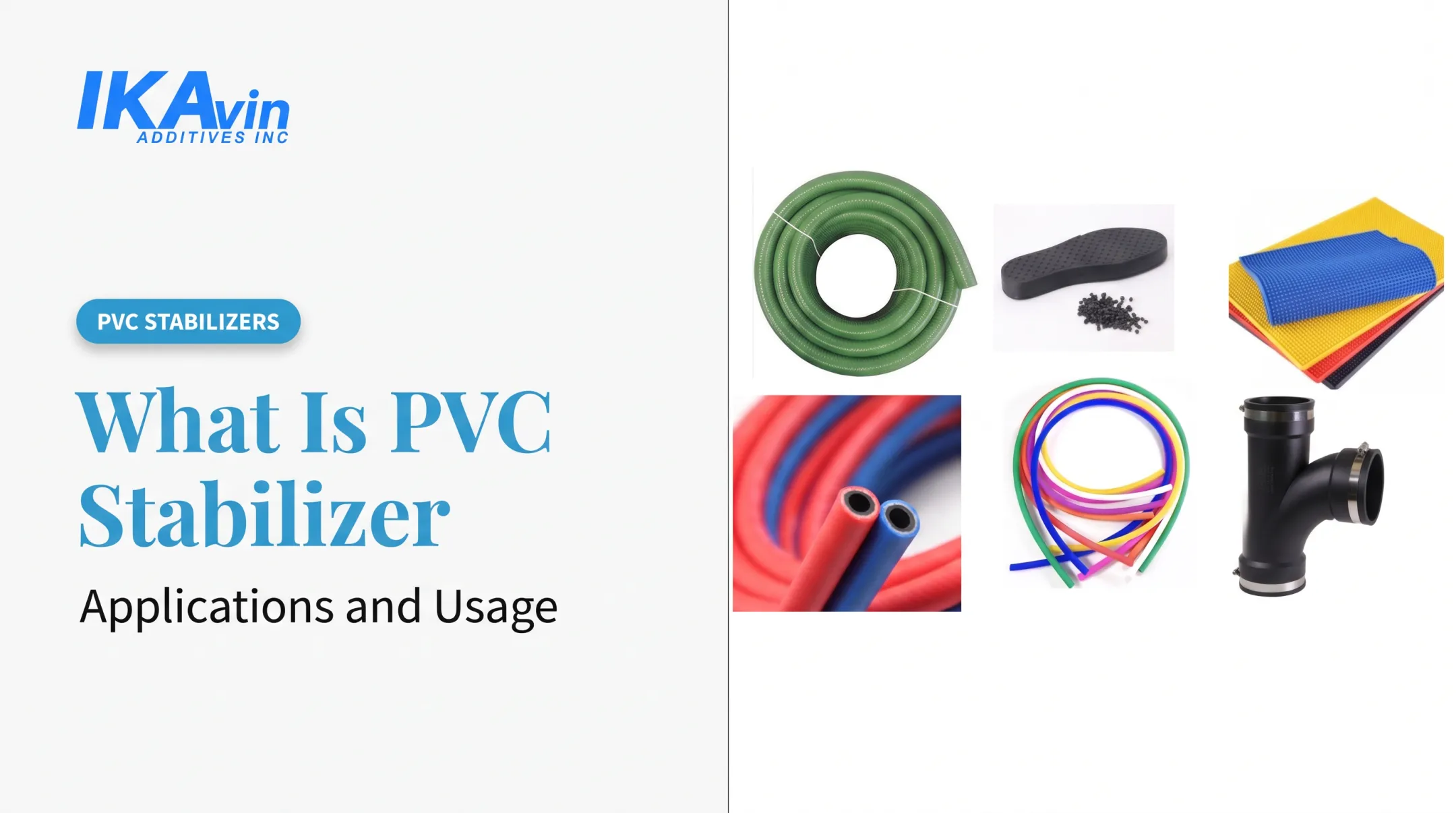
| Flexible hose & molded goods | Clarity, softness retention, aging resistance |
A Buyer's Checklist
Before locking in a formulation, work through:
- Resin type and filler/pigment package
- Plasticizer use (for flexible applications)
- Equipment and screw design
- Processing temperature and residence time
- Output rate targets
- Color requirements and outdoor exposure
- End-use destination (potable water, food contact, wire/cable, etc.)
- Desired physical form (powder, pellet, liquid)
Trial, Don't Copy
Stabilizer dosage and composition should come from controlled trials on your actual equipment, not a generic recipe borrowed from a different line. Compare processing data, finished-product results, cost-in-use, supply consistency, and documentation across any supplier you're evaluating.

This is where a technical supplier earns its place. IKAvin Additives Inc. combines IKA Group's 30-plus years of PVC stabilizer experience with Ingenia Polymers' manufacturing and technical capabilities. The company supplies sustainable calcium-based one-packs across the full application range:
- Pipe and conduit: IKAstab HGS 2000/2700
- Window and technical profiles: HGS 5300/5100
- Wire and cable: HGS 5200/4100/3400
- Resilient flooring: HGS 9400/9900
Formulations are custom-built around your resin and processing conditions, not sold as one-size-fits-all.
Practical next step: Build your full application and processing profile, then request a formulation review or sample trial. More detail upfront means a faster path to a composition that works on your line.
Frequently Asked Questions
What are the common ingredients in PVC stabilizers?
Formulations typically combine calcium, zinc, or other active stabilizing compounds with co-stabilizers, acid acceptors, lubricants, antioxidants, phosphites, polyols, or epoxy components. Exact ingredients vary significantly by product and application.
What are the different types of PVC stabilizers?
The main families are calcium-zinc, liquid mixed-metal, and calcium-organic or organic co-stabilizer systems. Suitability depends on the PVC application, performance requirements, and processing conditions.
How is a PVC stabilizer manufactured?
Manufacturing involves raw-material qualification, controlled batching, blending or chemical preparation, one-pack compounding, forming into a final product form, and release testing. The exact process depends on the stabilizer chemistry and product form.
Can the same PVC stabilizer be used for rigid and flexible PVC?
Some systems can serve both, but rigid and flexible PVC typically need different balances of thermal stability, lubrication, plasticizer compatibility, and migration resistance. Formulations are rarely directly interchangeable without adjustment.
How do manufacturers test PVC stabilizer performance?
Testing typically covers heat stability, color change, fusion behavior, torque, plate-out tendency, and surface appearance, using standards like ASTM D2115, ASTM D2538, and ISO 305. The final test plan should match the specific application and applicable standards.