
For pipe, conduit, fitting, and profile producers, this isn't hypothetical. Outdoor exposure happens constantly: in the yard during storage, on a flatbed during transport, at a jobsite before installation, or across the service life of an above-ground conduit run.
The good news is that UV degradation is manageable. Effective protection comes from a layered approach — formulation design, the right stabilizer package, controlled storage, smart installation choices, protective coatings where appropriate, and routine inspection. Here's what causes PVC pipe UV degradation, the warning signs to watch for, and how to build protection into your process from formulation through field service.
Key Takeaways
- UV changes PVC at the surface; impact depends on time, temperature, formulation, application, and stress
- Yellowing, chalking, and surface brittleness signal weathering, not automatic pressure or structural failure
- Weatherability belongs in the compound, not as a fix applied after installation
- Shaded storage, opaque covers, and compatible coatings reduce unnecessary exposure
- Validate stabilizer selection against weatherability, processing, and color-hold requirements
Common Causes of PVC Pipe UV Degradation
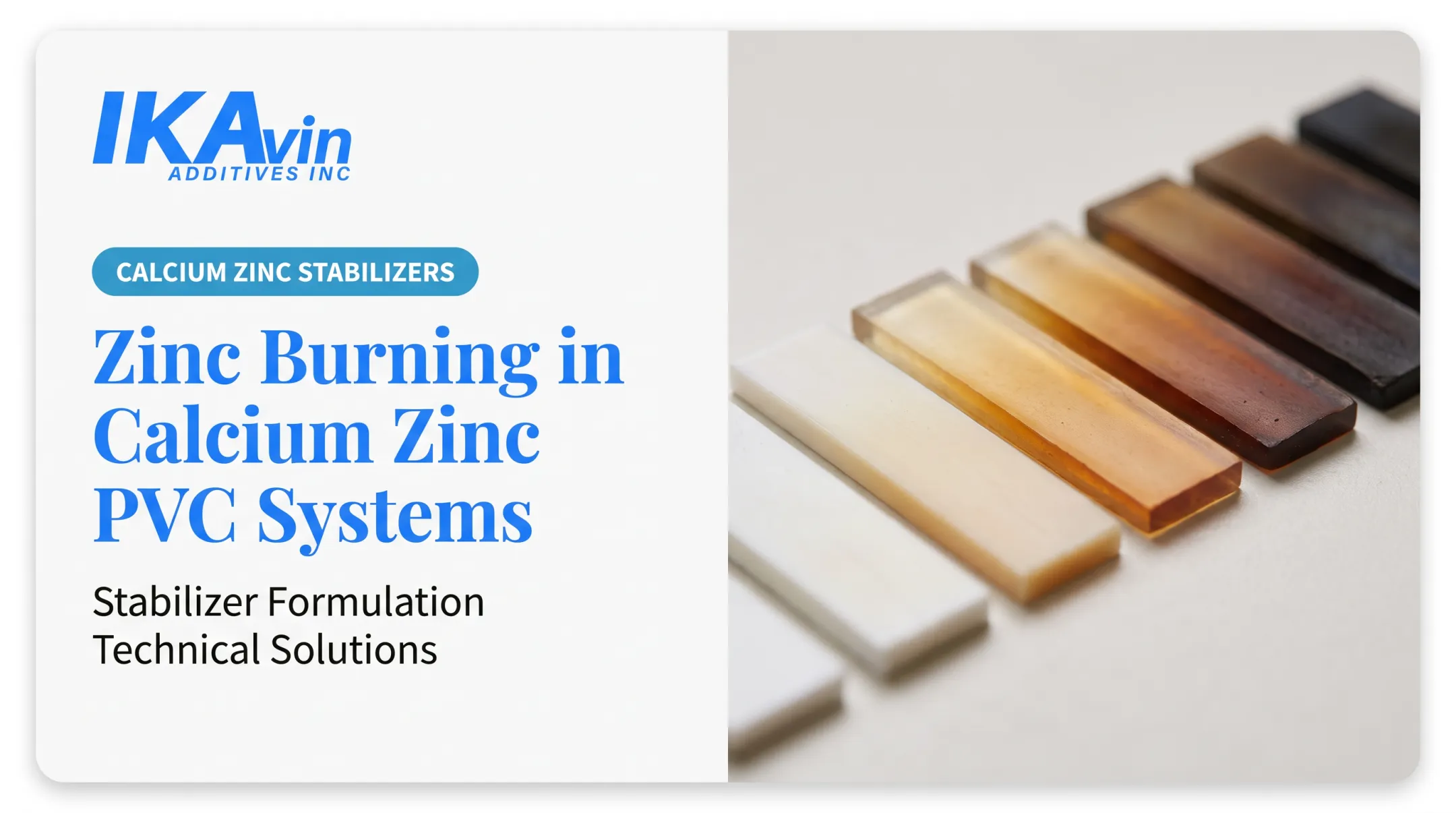
UV degradation in PVC is a photochemical reaction, not a bulk material failure. When ultraviolet energy strikes the pipe surface, it converts the outer layer into a polyene-rich structure, the change that shows up as discoloration.
This reaction is confined to a very thin surface layer, typically only a few thousandths of an inch deep, and it stops the moment sunlight exposure stops. Surface weathering and bulk pipe performance are two different things, and confusing them leads to bad decisions.
Several factors determine how much weathering actually occurs.
UV Exposure During Outdoor Storage
Pipe often sits outside long before reaching its final application, even projects destined for underground service. Common risk factors include:
- Open-yard or jobsite stacking with no cover
- Extended transport times on open trailers
- Reflective surroundings, like concrete or light gravel, that bounce additional UV onto the pipe
- Repeated seasonal exposure when inventory sits for months
The Plastics Pipe Institute reports that standard PVC pipe compounds meeting ASTM D1784 (such as PVC 1120 cell classification 12454) generally contain enough UV screen, usually titanium dioxide, for at least one year of outdoor storage. That's a baseline, not a guarantee across every climate and stacking condition.
Inadequate Weatherability in the Formulation
Not every PVC compound is built for prolonged direct sun. How a formulation weathers depends on several interacting choices:
- Resin selection and pigments
- Impact modifiers and processing stabilizers
- UV absorbers and light stabilizers
A compound engineered for strong thermal processing stability isn't automatically weatherable outdoors. Those are separate performance targets. TiO2, and in some formulations carbon black, contribute meaningful UV protection, but the right loading and dispersion depend on the specific product and its intended service.
Excessive Heat and Combined Environmental Exposure
UV rarely acts alone. Solar heating, high ambient temperatures, moisture, and airborne pollutants interact with UV radiation to accelerate surface weathering.
NOAA notes that UV Index varies by latitude, solar angle, elevation, ozone thickness, and cloud cover. A pipe stockpile in Phoenix and one in Seattle face genuinely different exposure loads, which is why a single nationwide degradation timeline doesn't hold up.
Mechanical Stress, Impact, and Handling After Exposure
A weathered surface can become more vulnerable to impact, scratching, cutting, and bending, even when the pipe's internal properties remain intact. Rough handling of stored or weathered pipe (dropping it, dragging it across gravel, stacking too aggressively) can turn minor surface weathering into cracks, rejects, or field failures.
Unprotected Above-Ground Service
Exposed conduit, irrigation lines, fencing components, and above-ground process piping all face sunlight as an ongoing service condition, not a temporary inconvenience. Pipe geometry, Schedule designation, color, or pressure rating alone don't prove UV resistance. Always check product-specific weatherability data and the relevant application standard before assuming pipe is fit for continuous sun exposure.

What Happens If PVC Pipe UV Degradation Is Ignored
Ignoring UV weathering isn't just a cosmetic problem. For manufacturers and asset owners, the downstream effects include:
- Appearance defects that trigger customer complaints or rejected shipments
- Higher scrap and replacement costs when weathered stock can't be sold at spec
- Reduced impact resistance, raising the odds of cracking during handling or installation
- Field issues, including leaks and unplanned maintenance, when damaged pipe gets installed anyway
Industry studies on weathered PVC pipe have generally found no adverse change to bulk tensile strength, modulus, or yield stress from surface weathering alone. Gloss loss, fading, and chalking show up on the surface, but the structural core often stays intact.
That's a useful distinction, and not a reason to ignore weathering. Impact resistance, the property that determines whether pipe survives handling, cutting, and installation, is the one most consistently affected.
A crew installing pipe that looks fine but has lost surface toughness can end up with breakage nobody anticipated.
Warning Signs to Watch For
Treat these as inspection triggers, not automatic failure declarations:
- Color and surface changes: Yellowing, browning, fading, chalking (a powdery surface residue), or loss of gloss compared with protected or newly produced material.
- Surface cracking and brittleness: Fine cracks, flaking, roughness, or damage appearing after impact, cutting, or drilling.
- Recurring test failures: Color drift, impact-test failures, or inconsistent outdoor performance across lots may point to a formulation, pigment, or additive-dispersion issue, not just normal weathering.
Any of these findings should prompt closer evaluation, not a judgment call based on appearance alone.
How to Prevent PVC Pipe UV Degradation
UV protection works best as a layered control plan: get the formulation right, limit unnecessary exposure, protect the surface when needed, and verify performance with real testing.
Select and Validate a Weatherable PVC Formulation
Before choosing a compound and stabilizer system, define:
- Expected exposure conditions and duration
- Product color and service temperature
- Mechanical and pressure requirements
- Storage period and intended design life
From there, validate the formulation with recognized methods such as xenon-arc exposure under ASTM G155, fluorescent UV exposure under ASTM G154, or natural outdoor exposure racks under ASTM G7.
Match acceptance criteria to the product standard for your application rather than one generic pass/fail number.

IKAvin's calcium-based stabilizer one-packs, including IKAstab HGS 2000 for conduit and IKAstab HGS 2700 for pipe, are formulated specifically for rigid PVC pipe and conduit production.
They're worth evaluating during a formulation review. Confirm suitability and UV performance with application-specific testing on your own line, resin, and pigment package.
Control Storage, Packaging, and Transport Exposure
Protect inventory before it reaches the jobsite:
- Store under shade or cover whenever possible
- Use opaque protection that doesn't trap heat or moisture against the pipe
- Allow airflow to prevent excessive heat buildup under coverings
- Rotate stock so older inventory ships first
- Document maximum outdoor exposure periods based on supplier guidance
Packaging materials also need to be compatible with the product and safe for the storage environment — the wrong wrap can create its own problems.
Use Coatings, Wraps, or Barriers for Exposed Pipe
For installed PVC facing continuous sunlight, a compatible, light-colored, water-based coating or opaque barrier can help. Before applying one:
- Confirm the pipe manufacturer's coating requirements
- Clean and dry the surface fully, free of oil or contamination
- Avoid oil- or solvent-based coatings unless the manufacturer specifically approves them
Light colors also help reduce heat buildup in addition to blocking UV.
Design the Installation to Reduce Direct Sunlight
Where the application allows it:
- Route pipe through shaded areas or enclosures
- Minimize unnecessary above-ground runs
- Bury pipe when the standard and application permit it
Burial, trenching, backfill, and thermal-movement allowances still need to follow the project specification and manufacturer instructions. UV protection shouldn't come at the expense of proper installation practice.
Inspect, Test, and Replace Affected Material Appropriately
Set clear inspection criteria and assign qualified personnel to check them with documented procedures. Cover at least:
- Discoloration and chalking
- Cracking and brittleness
- Impact damage
- Dimensional consistency
Severely weathered or damaged pipe shouldn't be judged by appearance alone. When integrity is in question, run product-specific technical assessment or destructive testing, or replace the material outright.
Tips for Long-Term Prevention and Control
A one-time fix doesn't hold up over years of production and field use. Build a documented UV-exposure control plan covering:
- Compound approval and raw-material traceability
- Maximum outdoor storage duration and packaging requirements
- Installation conditions and inspection frequency
- Corrective actions when something fails
Pair that plan with routine production checks:
- Color and dispersion
- Thermal stability
- Mechanical performance
- Dimensional consistency
- Weatherability testing matched to your product and market
Train your teams as well:
- Warehouse staff need to know the difference between brief, acceptable exposure and prolonged unprotected storage
- Installers need guidance on handling weathered pipe safely
- Customers benefit from clear storage and installation instructions
When field complaints or test failures occur, review them by product grade, pigment system, stabilizer package, lot number, storage history, and climate. That level of detail usually reveals the actual root cause instead of a guess.

A technical partner can close that loop. IKAvin works directly with PVC producers to review field data and refine stabilizer one-pack formulations, rather than leaving weatherability to trial and error on the production floor.
Conclusion
PVC pipe UV degradation has identifiable, manageable causes: direct sunlight, formulation gaps, heat, storage practices, and mechanical stress. None of them are mysterious, and none require guesswork to address.
Prevention works best when weatherability gets designed into the compound from the start, then reinforced with controlled storage, compatible surface protection, sound installation practices, and verification testing. Treating UV protection as an afterthought (something to patch after pipe is already installed) is the approach most likely to fail.
If your current formulation hasn't been validated against your actual exposure conditions, that's worth revisiting. IKAvin's team works with PVC pipe and conduit producers on stabilizer one-pack selection and customization, backed by more than 30 years of combined PVC stabilizer experience through IKA Group. Reach out before your next formulation review.
Frequently Asked Questions
How long will PVC pipe last in direct sunlight?
There's no universal number. Service life depends on the formulation, exposure intensity, temperature, color, application, and mechanical loading it experiences. Check product-specific weatherability data and testing results rather than a general estimate.
What type of PVC pipe is UV resistant?
UV resistance comes from the complete formulation — resin, pigments, and stabilizer package — not just the PVC label or Schedule rating. Look for UV-stabilized or weatherable grades with manufacturer documentation confirming outdoor performance for your intended use.
Can you paint PVC to make it UV resistant?
Yes, in many cases. A compatible, properly applied light-colored water-based coating can reduce direct UV exposure on installed PVC. Check the pipe manufacturer's instructions first, and avoid oil- or solvent-based coatings unless specifically approved.